On PDA, the aerial mycelium is dense and white to yellow, with reddish coloration tending to appear over time. Colonies are typically slow growing, and the under surface is often described as carmine red. Sporodochia appear as the colony ages.
On malt agar, the mycelium is short, white to dark pink, sometimes orange. Sporodochia only appear on old cultures.
Conidiophores: Unbranched and branched monophialides.
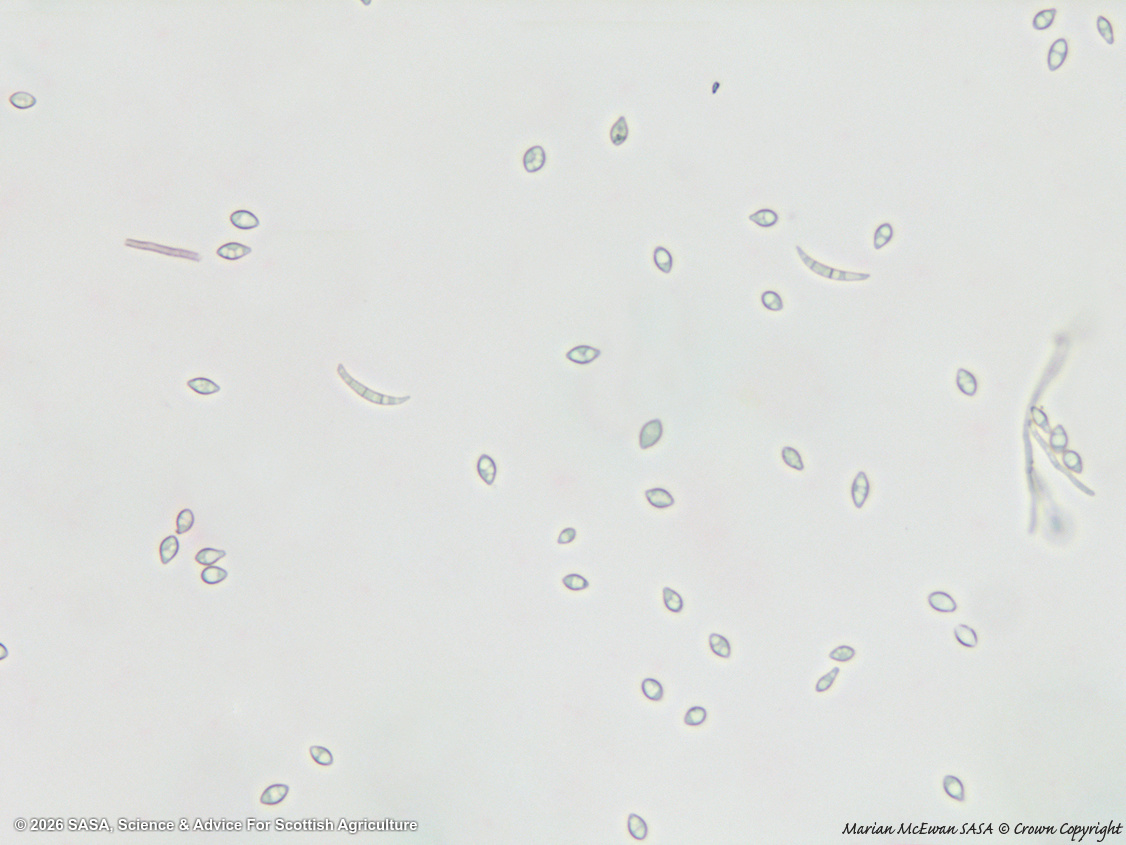
Macroconidia are abundant and sickle shaped, or otherwise described as relatively slender and falcate to almost lunate. The basal cell is distinctly foot shaped or notched.
Microconidia are abundant and are lemon to pear shaped (also called 'citriform'), or spindle shaped, napiform, oval and pyriform, with usually 0- but occasionally 1-septate, often with a papilla at the base. Often they will appear in false heads like a cluster of grapes in the aerial mycelium.
Chlamydospores can be formed by some isolates, but form very slowly. If present, they are formed singly, or in chains.