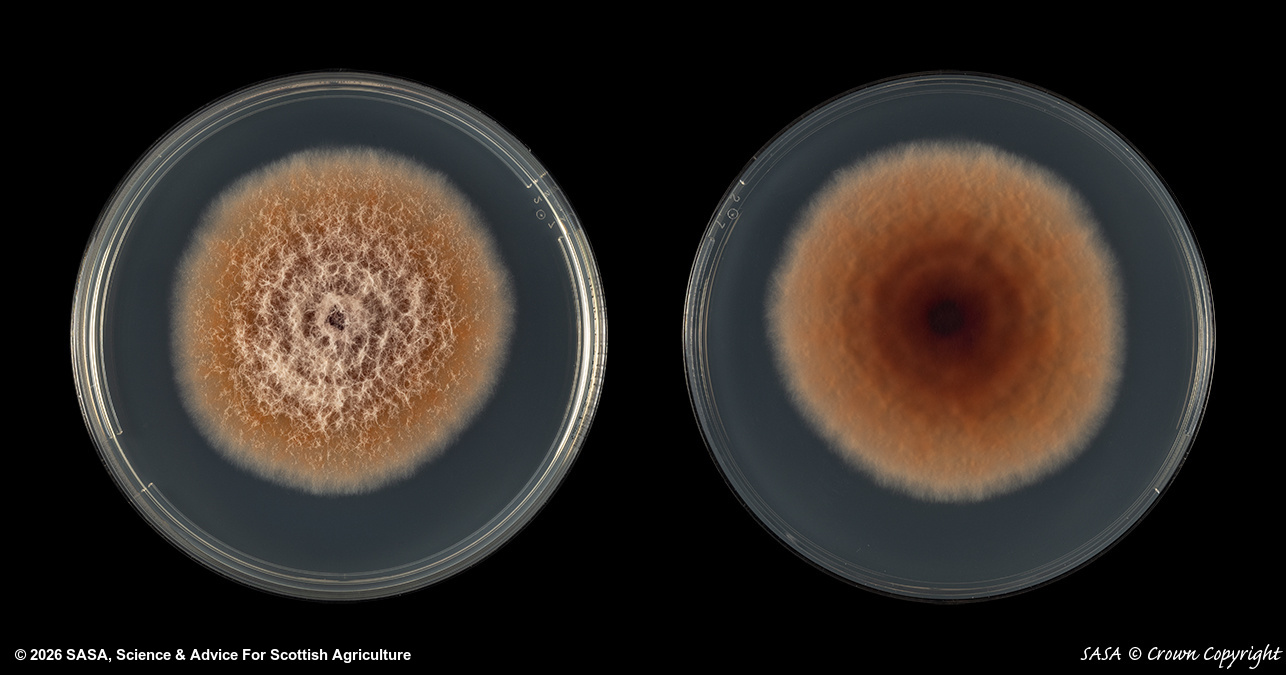
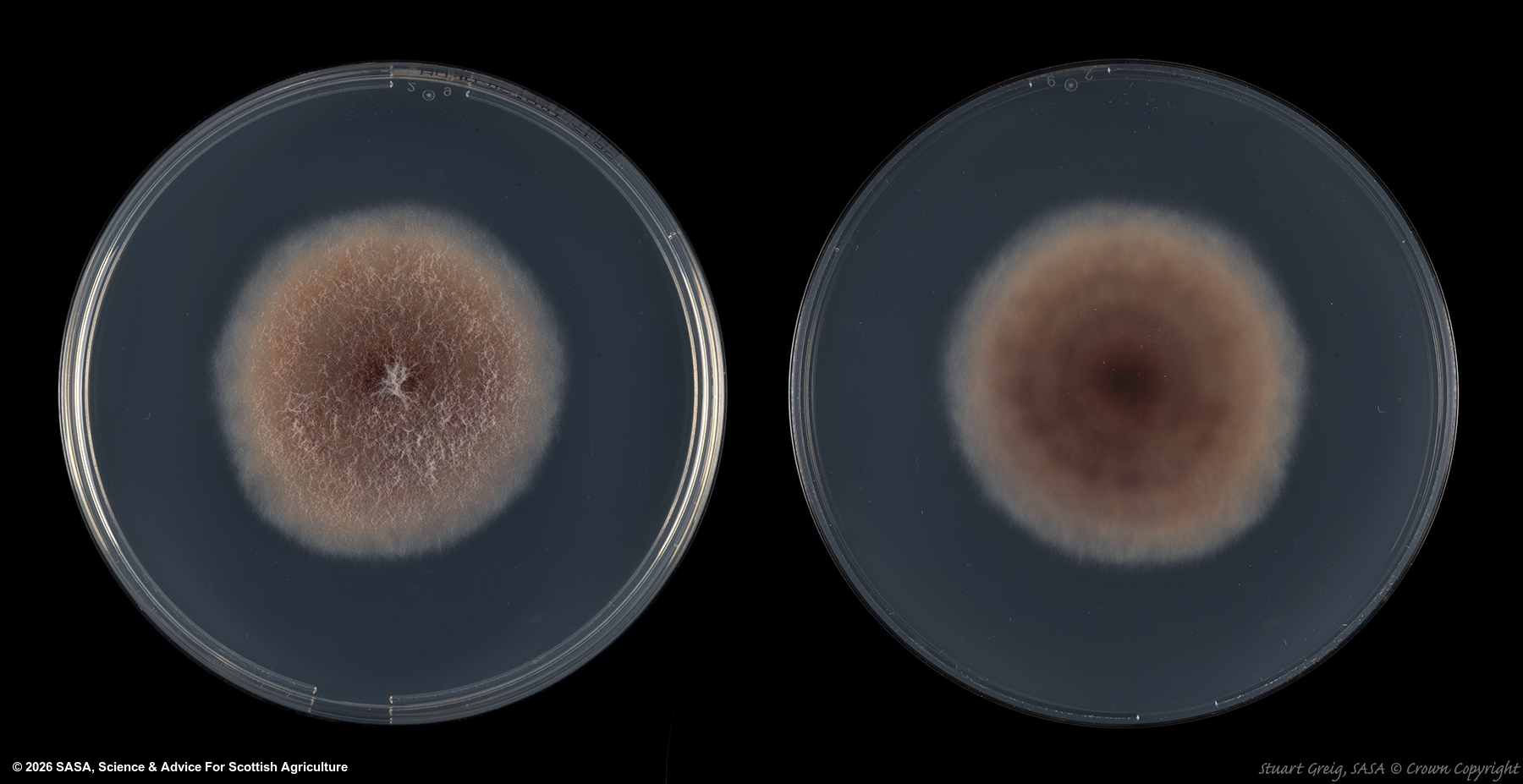
ISTA method 7-009 describes growth on blotter paper, with incubation for 10-16 days at 20C under fluorescent lighting with alternating periods of darkness. Fungal colony description on blotter paper: Examine each colony at a magnification of x100-400 for the presence of and appearance of polyphialides and conidia (both micro and macroconidia must be produced).
On PDA: colony will be relatively fast growing, with white mycelium, but may also produce violet pigment in the agar.
On CLA and SNA, the colony will produce the coiled, sterile hyphae for which the species is known for (more so on SNA).
Sporodochia are rare, usually pale orange, and slightly more reliably found on CLA.
Macroconidia are relatively slender and usually 3-septate, often difficult to find. Apical cell is curved, and basal cell is relatively poorly developed.
Microconidia are 0-septate, obovoid, oval or allantoid in shape. They are typically abundant, and produced singly or in aggregations in the aerial mycelium. Polyphialides are diagnostic, but monophialides also exist. Chlamydospores are absent.