Verticillium dahliae on Asimina triloba
Image credits: Juliane Reiterer and Eva Lehner, AT
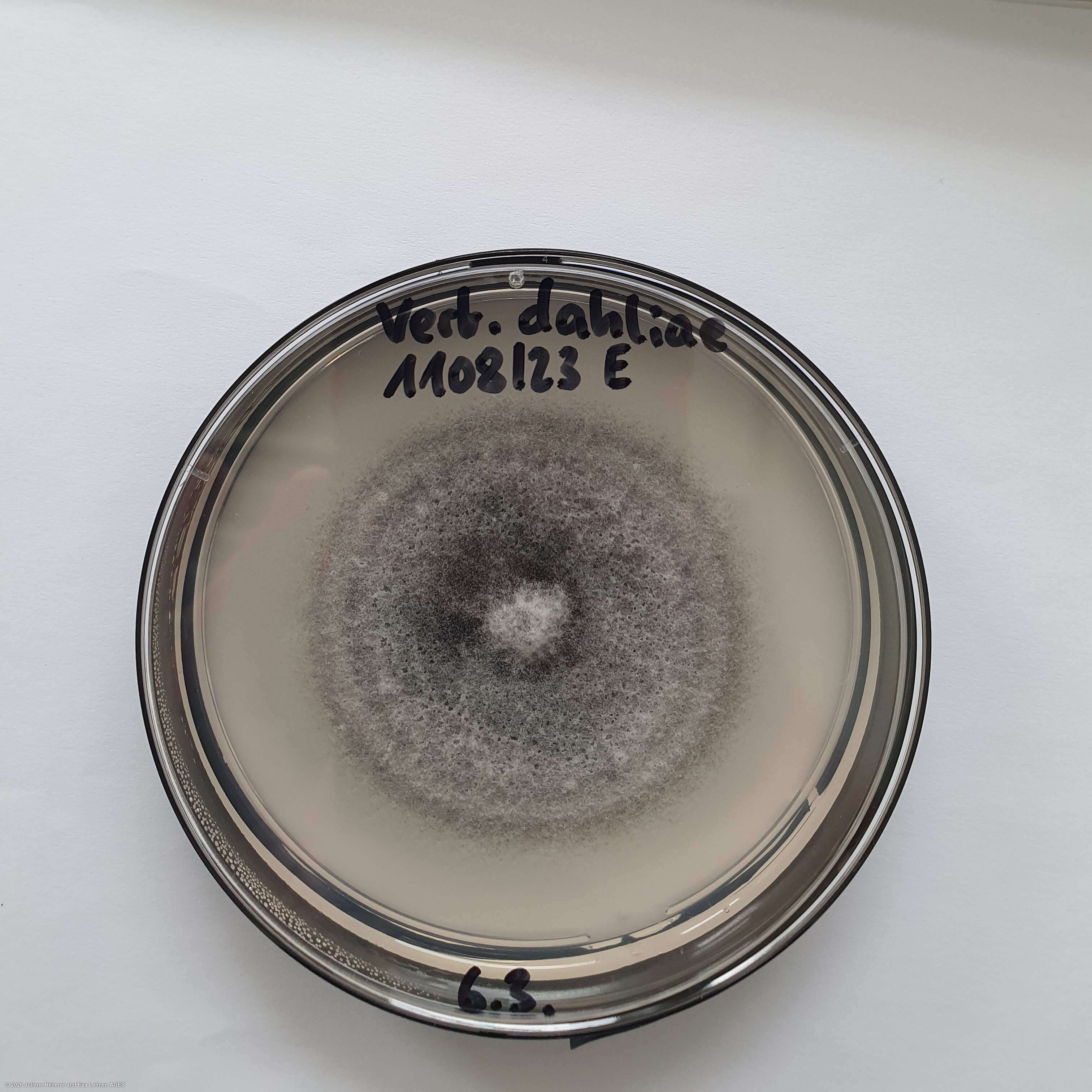
The pathogen was isolated directly from an infected pawpaw plant (first detection of this pathogen on this host) in Austria. The colony appears light grey and dark grey (with a darker central zone). The surface is dense, with a slightly zonate structure. Image 3: Clusters: whorled conidiophores (phialides), image 4: dark microsclerotia, single-celled, oval or ellipsoidal, unseptate conidia, image 5: stained conidia.
sterilisation: none none | growth time: 25 days | temperature: room temperature | lighting: daylight | plate size: 90mm | agar: PDA ( VWR) |
DNA testing: The result was confirmed by PCR.
Verticillium dahliae on Asimina triloba
Image credits: Juliane Reiterer and Eva Lehner, AT
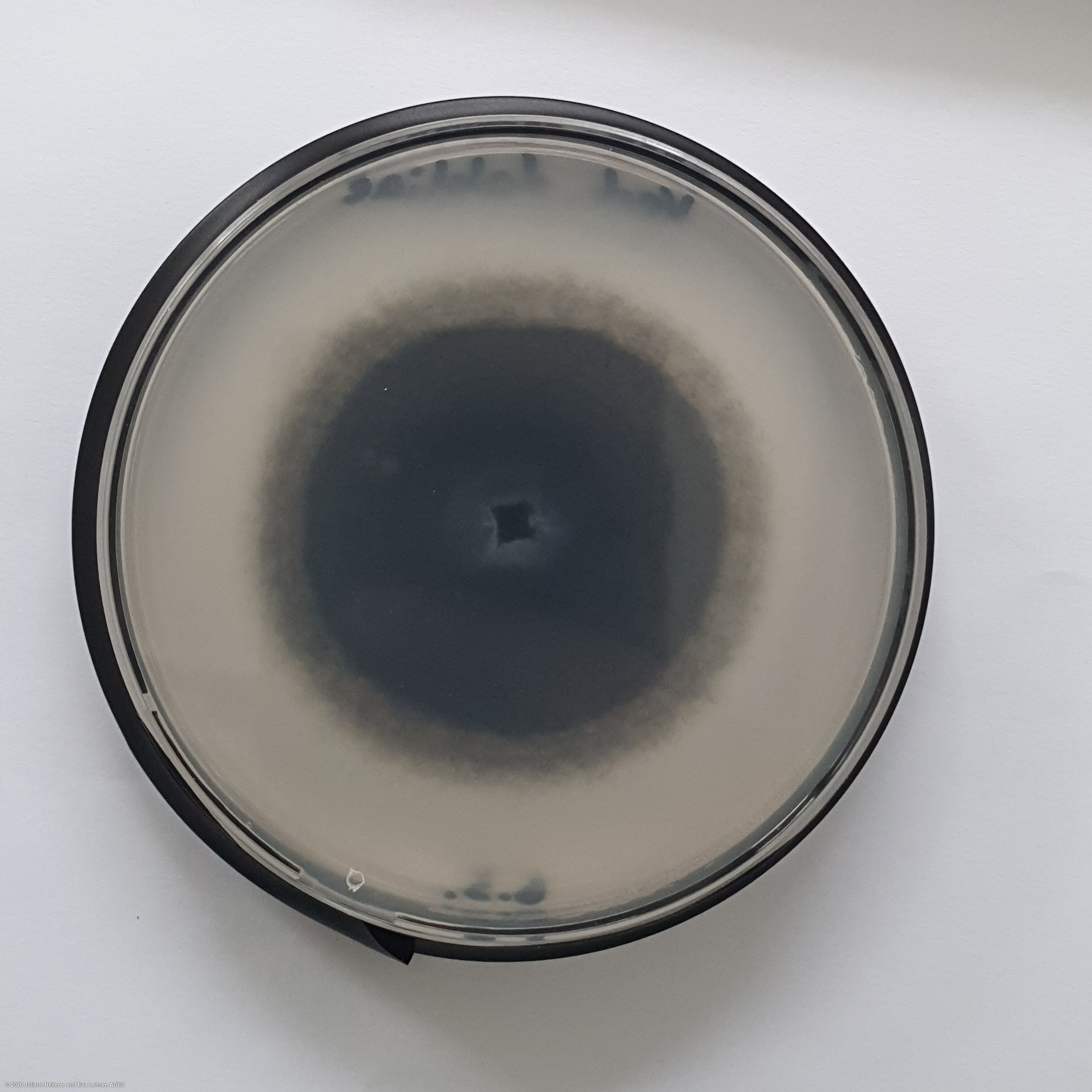
The pathogen was isolated directly from an infected pawpaw plant (first detection of this pathogen on this host) in Austria. The colony appears light grey and dark grey (with a darker central zone). The surface is dense, with a slightly zonate structure. Image 3: Clusters: whorled conidiophores (phialides), image 4: dark microsclerotia, single-celled, oval or ellipsoidal, unseptate conidia, image 5: stained conidia.
sterilisation: none none | growth time: 25 days | temperature: room temperature | lighting: daylight | plate size: 90mm | agar: PDA ( VWR) |
DNA testing: The result was confirmed by PCR.
Verticillium dahliae on Asimina triloba
Image credits: Juliane Reiterer and Eva Lehner, AT
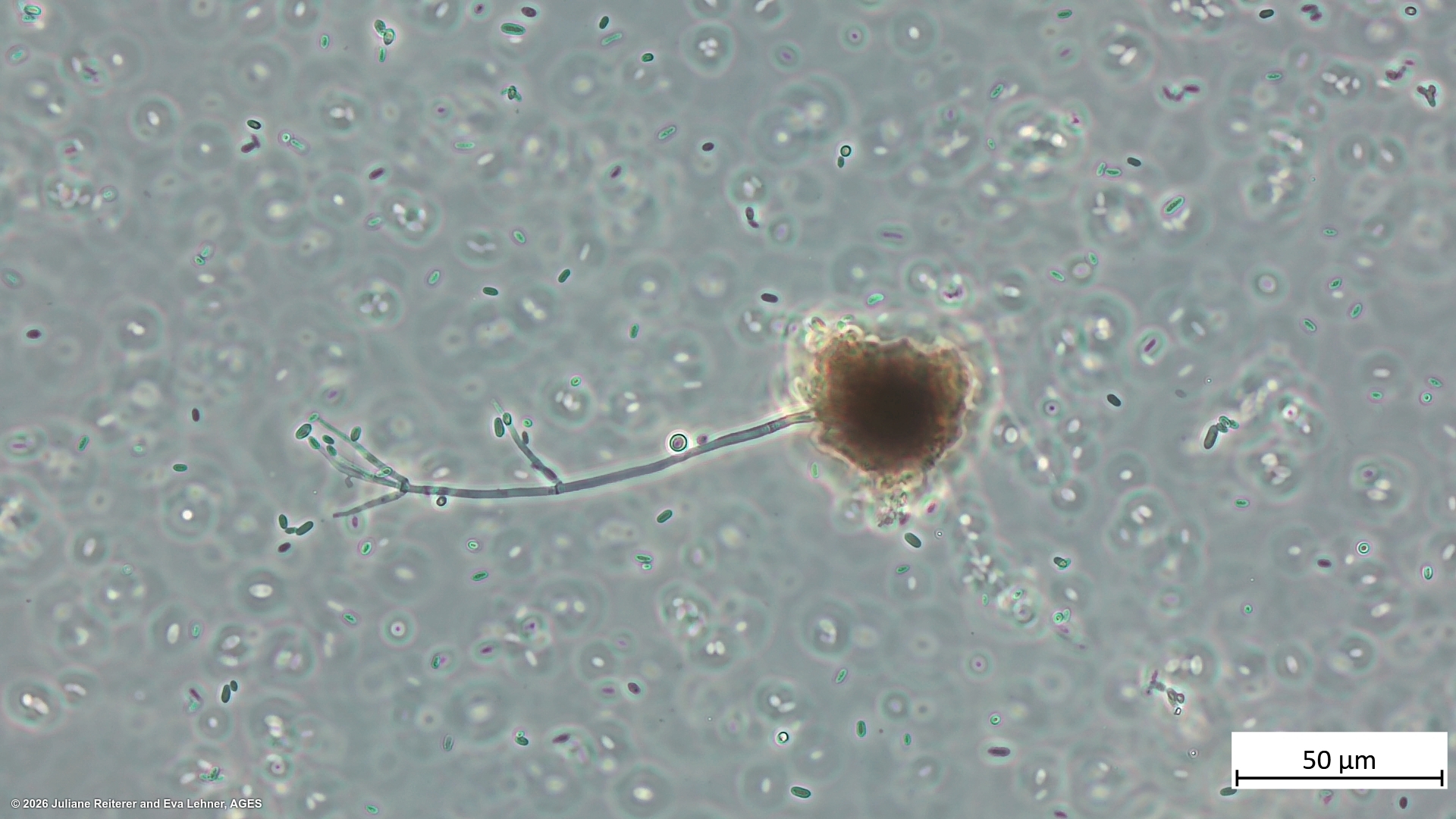
The pathogen was isolated directly from an infected pawpaw plant (first detection of this pathogen on this host) in Austria. The colony appears light grey and dark grey (with a darker central zone). The surface is dense, with a slightly zonate structure. Image 3: Clusters: whorled conidiophores (phialides), image 4: dark microsclerotia, single-celled, oval or ellipsoidal, unseptate conidia, image 5: stained conidia.
sterilisation: none none | growth time: 25 days | temperature: room temperature | lighting: daylight | plate size: 90mm | agar: PDA ( VWR) |
DNA testing: The result was confirmed by PCR.
Verticillium dahliae on Asimina triloba
Image credits: Juliane Reiterer and Eva Lehner, AT
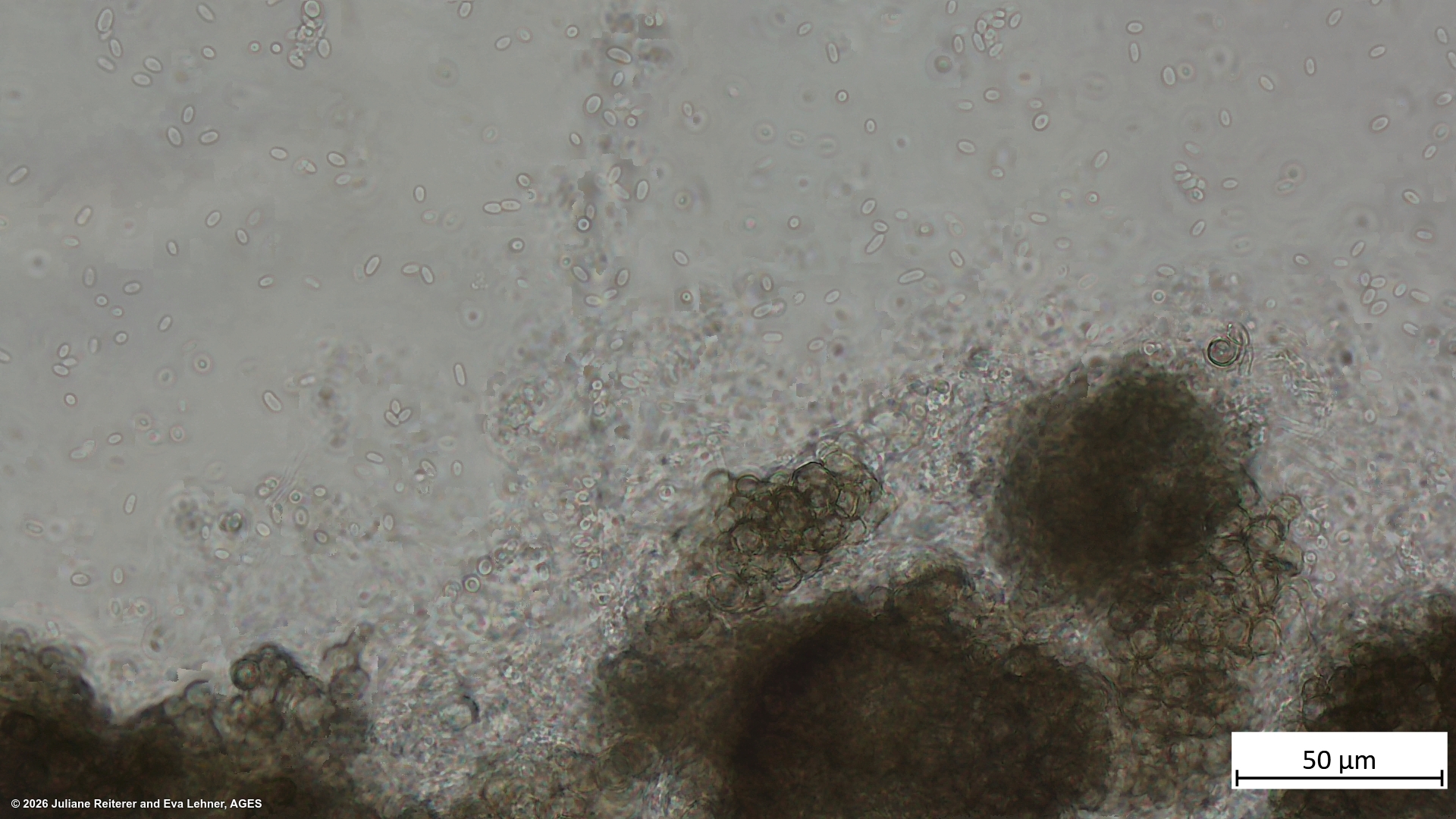
The pathogen was isolated directly from an infected pawpaw plant (first detection of this pathogen on this host) in Austria. The colony appears light grey and dark grey (with a darker central zone). The surface is dense, with a slightly zonate structure. Image 3: Clusters: whorled conidiophores (phialides), image 4: dark microsclerotia, single-celled, oval or ellipsoidal, unseptate conidia, image 5: stained conidia.
sterilisation: none none | growth time: 25 days | temperature: room temperature | lighting: daylight | plate size: 90mm | agar: PDA ( VWR) |
DNA testing: The result was confirmed by PCR.
Verticillium dahliae on Asimina triloba
Image credits: Juliane Reiterer and Eva Lehner, AT
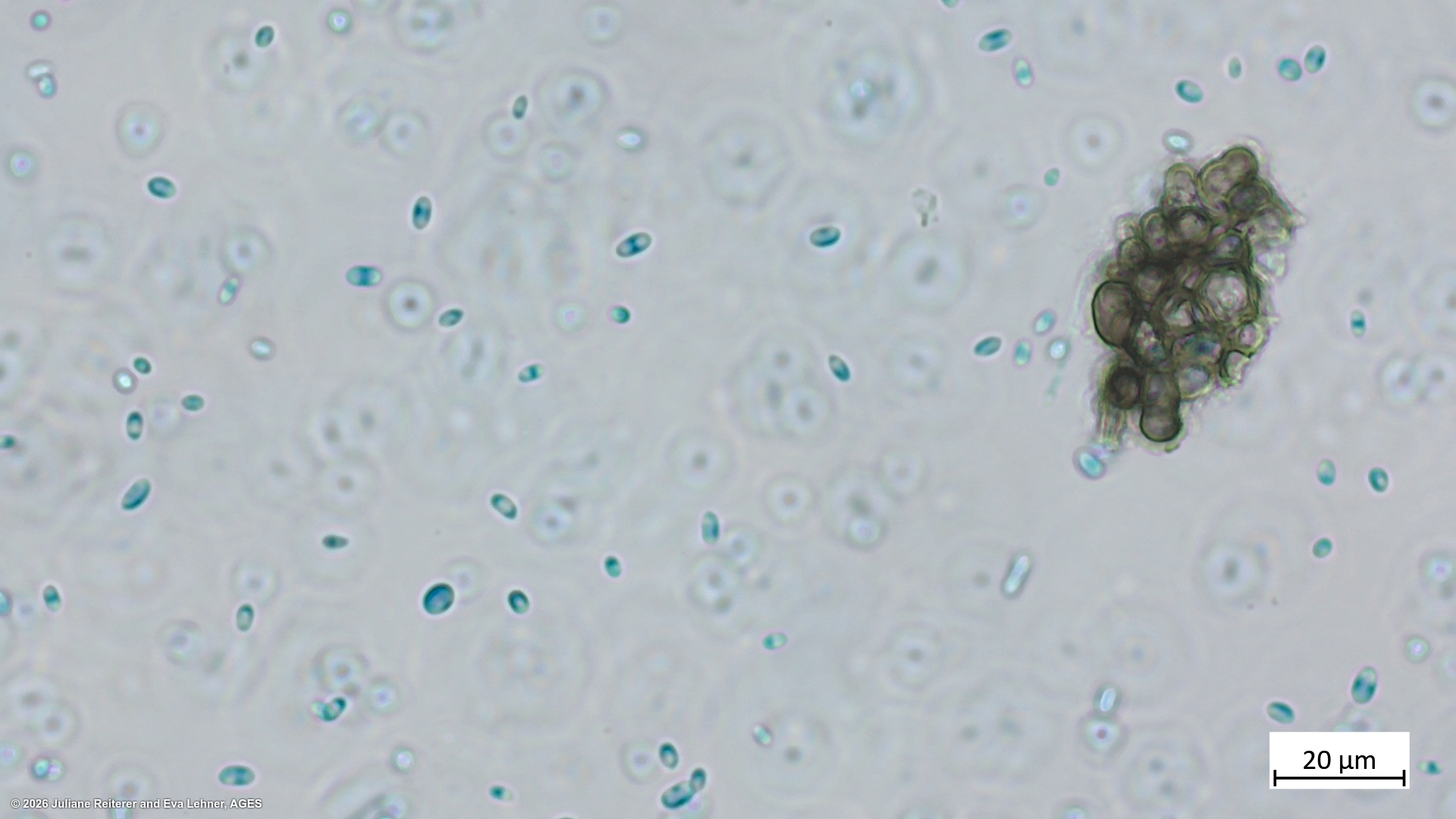
The pathogen was isolated directly from an infected pawpaw plant (first detection of this pathogen on this host) in Austria. The colony appears light grey and dark grey (with a darker central zone). The surface is dense, with a slightly zonate structure. Image 3: Clusters: whorled conidiophores (phialides), image 4: dark microsclerotia, single-celled, oval or ellipsoidal, unseptate conidia, image 5: stained conidia.
sterilisation: none none | growth time: 25 days | temperature: room temperature | lighting: daylight | plate size: 90mm | agar: PDA ( VWR) |
DNA testing: The result was confirmed by PCR.